
Uterine Fibroid Embolization: A Minimally Invasive Option Richmond Women Should Know About
August 17, 2025 Adam McLaurin, DO
If fibroids are disrupting your life, you have options
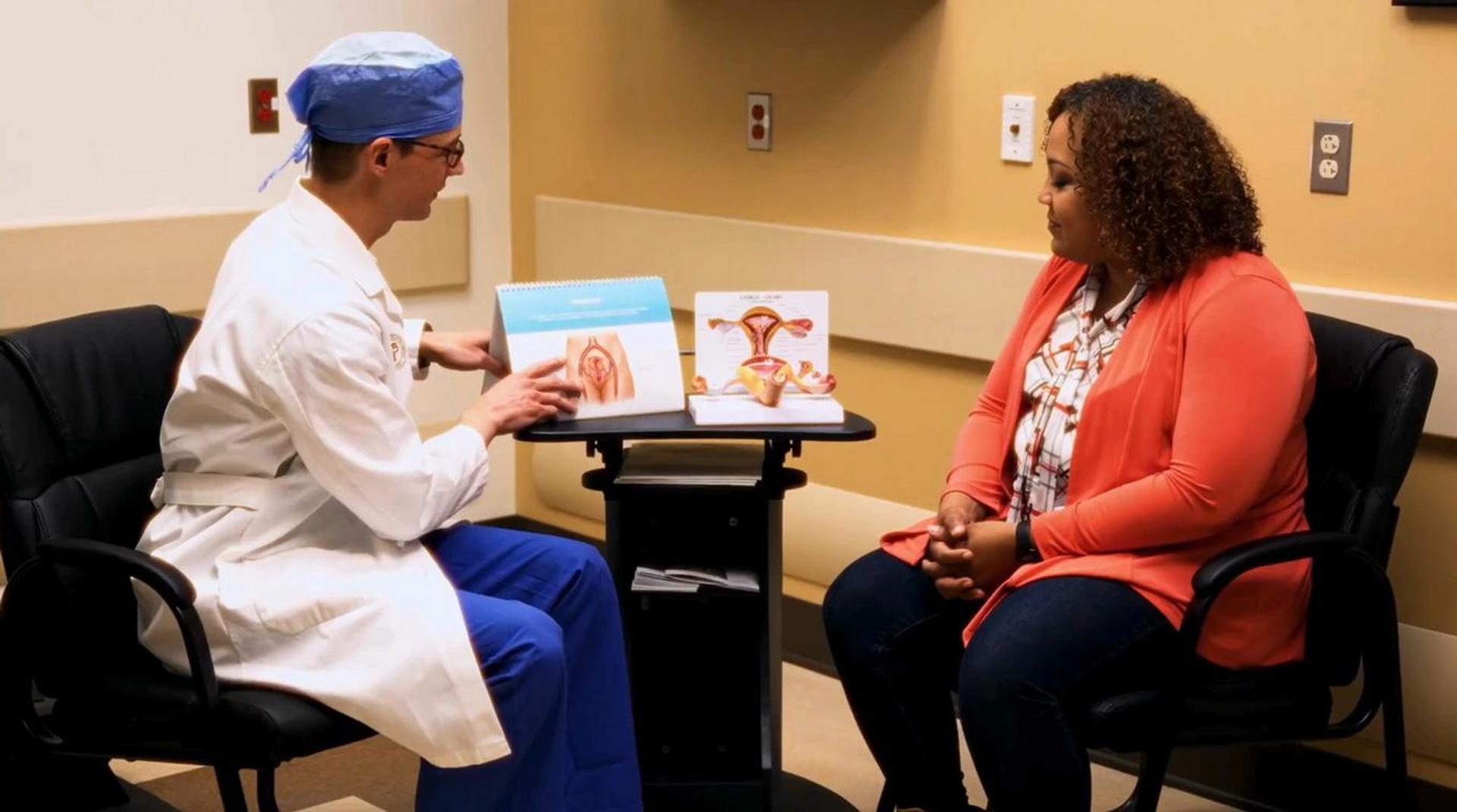
Heavy periods, pelvic pressure, frequent urination, painful cramps, and fatigue are common signs of uterine fibroids. Many people are told their choices are to “wait and see” or have surgery. In reality, there’s a proven minimally invasive treatment that preserves the uterus and gets most patients back to normal activities quickly: Uterine Fibroid Embolization (UFE).
I’m Adam McLaurin, DO, an interventional radiologist at Richmond Vascular Center. I perform UFE for patients from across Central Virginia—Richmond, Henrico, Chesterfield, Midlothian, Short Pump, and beyond. Here’s what you should know.
What is UFE?
Uterine Fibroid Embolization (also called Uterine Artery Embolization) is a targeted, image-guided procedure. Through a tiny pinhole in the wrist or groin, I navigate a small catheter to the uterine arteries and deliver microspheres that block the blood supply feeding fibroids. Without that blood flow, fibroids shrink and symptoms improve.
- Outpatient (home the same day in most cases)
- No surgical incisions—just a band-aid
- Uterus-sparing option
- Quick recovery compared with major surgery
Who is a good candidate?
You may be a candidate for UFE if you have:
- Heavy or prolonged menstrual bleeding
- Pelvic pain or pressure
- Urinary frequency/urgency from a bulky uterus
- Anemia related to bleeding
- Multiple fibroids or fibroids in locations that make surgery difficult
- A desire to avoid hysterectomy or long surgical recovery
We’ll review your symptoms, exam, and imaging (often MRI or ultrasound) to confirm that UFE is appropriate. I routinely coordinate with your OB-GYN so you have a unified care plan.
Benefits of UFE vs. surgery
- Preserves the uterus (no hysterectomy)
- Treats multiple fibroids at once (not only a single lesion)
- Short recovery—most patients resume light activity in a few days
- Low complication rate when performed by experienced IR physicians
- Small entry point—typically no stitches
How the procedure works (step-by-step)
- Consultation & imaging: We confirm fibroids are driving your symptoms and that UFE is the right fit.
- Arrival & anesthesia: You receive light sedation; most patients nap comfortably.
- Pinhole access: I enter through the radial artery (wrist) or femoral artery (groin)—about the size of a grain of rice.
- Precision treatment: Using live X-ray guidance, I deliver tiny embolic beads to the uterine arteries supplying the fibroids.
- Completion & recovery: Access site is bandaged; you rest in our post-procedure area. Most patients go home the same day.
Recovery timeline: what to expect
- Days 1–3: Cramping and pelvic soreness are common as fibroids lose blood supply. We prescribe a personalized comfort regimen.
- Days 3–7: Energy returns; many patients resume desk work and short outings.
- Weeks 4–12: Progressive symptom relief as fibroids shrink. Periods typically become lighter and shorter over the following cycles.
- Months 3–6: Maximum improvement for most patients.
UFE vs. hysterectomy vs. myomectomy (quick guide)
- UFE: Minimally invasive, treats many fibroids at once, uterus-sparing, outpatient.
- Hysterectomy: Removes the uterus; definitive but major surgery and longer recovery.
- Myomectomy: Surgically removes individual fibroids; helpful for certain goals but may miss tiny or future fibroids.
Your goals matter—symptom relief, recovery time, preserving the uterus, or future fertility. We’ll talk through each option openly and coordinate with your OB-GYN.
Risks and safety
All medical procedures carry risk. With UFE, potential risks include temporary cramping, low-grade fever, post-embolization syndrome (flu-like symptoms), rare infection, or need for additional treatment. We minimize risk with careful imaging, sterile technique, and close follow-up.
My approach at Richmond Vascular Center
- Personalized planning: Your symptoms, cycle history, and imaging guide a tailored plan.
- Comfort-focused recovery: Multimodal pain control and proactive check-ins.
- Team-based care: I collaborate with your OB-GYN and primary care for continuity.
- Local access: Convenient, modern outpatient care close to home in Richmond.
Real-world results we often see
Patients frequently report lighter periods, less pelvic pressure, better sleep (fewer bathroom trips), and a return to normal energy within weeks. Many also see improved iron levels and fewer missed days of work or activities.
Ready to explore whether UFE is right for you?
If fibroids are disrupting your life, you don’t have to live that way. Schedule a UFE consultation with me at Richmond Vascular Center. We’ll review your imaging, answer every question, and build a plan that aligns with your goals.
Call: (804) 424-0658
Request an appointment: Click here
Location: Richmond, VA (serving Henrico, Chesterfield, Midlothian, Short Pump, and Central Virginia)
Frequently Asked Questions
- How long does the UFE procedure take?
Most procedures take about 45–90 minutes, and you usually go home the same day.
- Will my periods stop after UFE?
Periods typically continue but become lighter and shorter. Some patients have a skipped or irregular cycle as the uterus recovers.
- Can UFE affect fertility?
UFE is uterus-sparing, but every situation is unique. If you’re planning pregnancy, we’ll discuss your goals and coordinate with your OB-GYN or fertility specialist.
- How soon will I feel better?
Cramping improves over several days. Most patients notice meaningful symptom relief within 1–3 months, with continued improvement up to 6 months.
- What if I have many fibroids?
UFE treats multiple fibroids at once by targeting their shared blood supply, which can be advantageous when numerous fibroids are present.
About the author
Adam McLaurin, DO is a board-certified interventional radiologist at Richmond Vascular Center. He specializes in minimally invasive treatments for fibroids, peripheral artery disease, and image-guided procedures that help patients heal faster with less downtime.
Return to News & ResourcesMore News
Why Making Fibroids Count is a Clinical and Moral Mandate for Women’s Health
March 12, 2026
Cold Now, Hot Later: Why Leg Vein Symptoms Change with the Season
February 23, 2026
Black History Month, Fibroids, and Health Equity: What Every Woman Should Know
February 16, 2026
Virginia’s Top Doctors in Radiology 2026
January 21, 2026
Without a Scalpel Day: Rethinking How Common Conditions Are Treated
January 15, 2026